Saraswati S Serenity
Introduction to Saraswati S Serenity
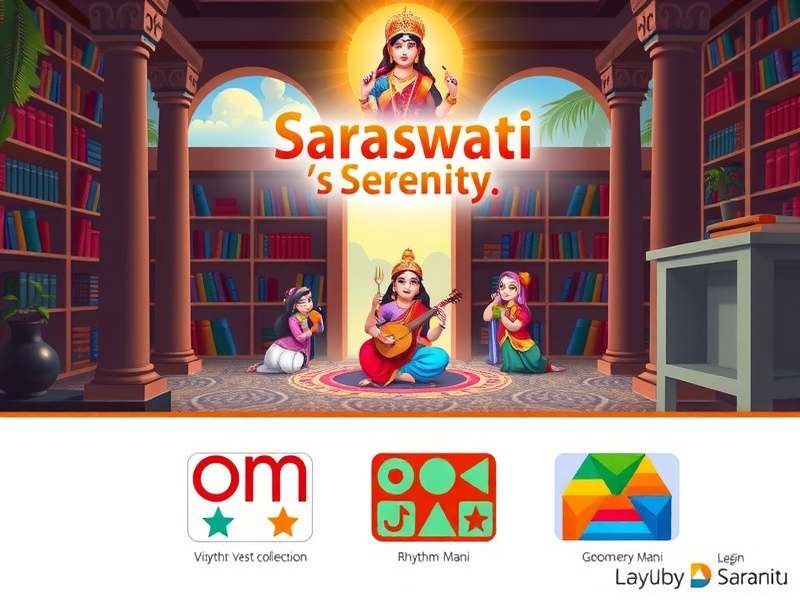
Saraswati S Serenity is a revolutionary mythological wisdom-adventure game developed by Indian Wisdom Studios, launched in early 2024. Unlike typical action-packed games, this gem focuses on the essence of Goddess Saraswati—goddess of knowledge, music, art, and wisdom—drawing deep from Vedic texts, Upanishads, and ancient Indian scholarly traditions.
What makes Saraswati S Serenity stand out is its unique blend of education and entertainment. Players don’t just play—they learn about India’s rich intellectual heritage, from ancient mathematics and astronomy to classical music and poetry, all while solving engaging puzzles and exploring beautifully crafted worlds.
Available on Android, iOS, and PC, Saraswati S Serenity has quickly become a favorite among both children and adults in India. Parents particularly appreciate how it makes learning fun, while scholars praise its accurate representation of traditional knowledge systems.
The game’s tagline, "Wisdom is the true weapon," reflects its core philosophy—challenging players to use their intellect, creativity, and patience rather than brute force. It’s not just a game; it’s a journey through India’s most precious intellectual treasures.
Gameplay Mechanics of Saraswati S Serenity
The gameplay of Saraswati S Serenity revolves around three core pillars: Knowledge Quests, Creative Challenges, and Musical Puzzles. Each element is designed to stimulate different aspects of the mind, making the game both entertaining and enriching.
Players navigate through "Vidyā Lokas" (worlds of knowledge), each dedicated to a different field—like "Shabd Lok" (world of language), "Ganit Lok" (world of mathematics), "Sangeet Lok" (world of music), and "Chitrakala Lok" (world of art). To progress, they must solve puzzles that test their understanding of these subjects.
Unlike games with time limits, Saraswati S Serenity encourages slow, thoughtful play. There’s no "game over"—only hints and guidance when players get stuck. This approach has earned it praise from educators who say it reduces gaming anxiety in children.
Knowledge Quests
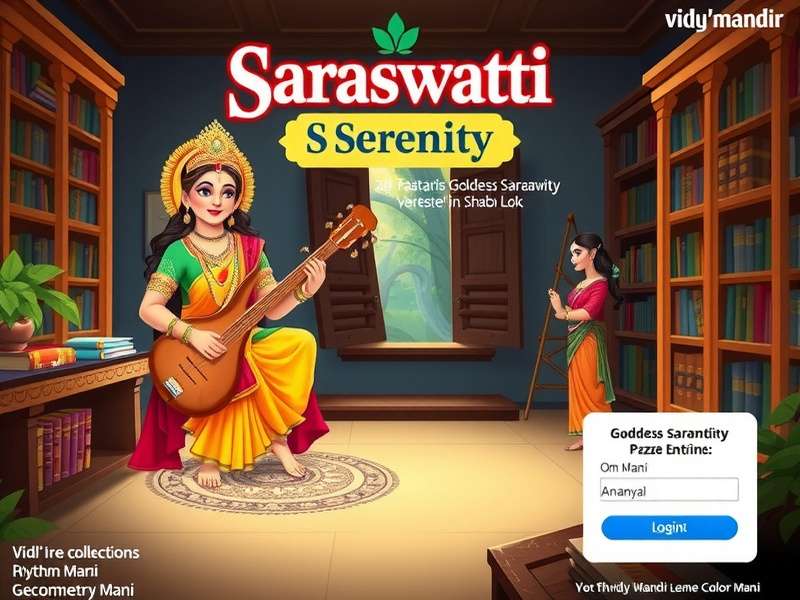
These are puzzle sequences based on Indian academic traditions. For example, in Ganit Lok, players might need to solve ancient mathematical problems from the Sulba Sutras or calculate planetary positions using traditional Indian astronomy.
In Shabd Lok, challenges include deciphering Sanskrit verses, matching Hindi proverbs to their meanings, or completing Tamil poetry with the correct rhyme. These quests are designed with varying difficulty levels, making them accessible to both kids (ages 8+) and adults.
Completing Knowledge Quests earns players "Vidyā Mani" (gems of knowledge), which unlock new areas and special content like historical anecdotes about Indian scholars.
Creative Challenges
These activities let players express their creativity, channeling Saraswati’s association with art. In Chitrakala Lok, players might be tasked with designing rangoli patterns based on mathematical symmetry or coloring traditional Madhubani paintings according to cultural conventions.
Another popular Creative Challenge is "Rasa Creation," where players mix different emotional themes (like courage, compassion, or joy) to compose stories that resolve conflicts in the game’s narrative. The better the story’s emotional depth, the higher the reward.
Many schools in India have started using these challenges as part of their art curriculum, as they teach traditional techniques in an interactive way.
Musical Puzzles
Music is at the heart of Saraswati S Serenity, honoring Saraswati’s veena. In Sangeet Lok, players learn about ragas, talas, and traditional instruments like the sitar, mridangam, and flute.
Puzzles include matching ragas to their appropriate times of day (like Bhairavi for morning or Yaman for evening), recreating rhythmic patterns on a virtual mridangam, or identifying instruments by their sound.
A unique feature is the "Veena Masterclass"—where players can learn to play simple melodies on a virtual veena, with feedback on their accuracy. Many users report that this feature has sparked their interest in learning real Indian classical music.
Progression System
Instead of "levels," Saraswati S Serenity uses "Gyan Stages" (knowledge stages), each representing a step in the player’s intellectual journey. From "Shishya" (student) to "Acharya" (teacher) and ultimately "Rishi" (sage), each stage unlocks more complex puzzles and exclusive content.
Players earn "Prasad Points" by helping non-player characters (NPCs) solve their problems—like teaching a young student to read or helping a musician compose a melody. These points can be exchanged for hints, decorative items for their in-game "Vidyā Mandir" (knowledge temple), or special outfits for playable characters.
The game also features a "Satsang" (discussion) system, where players can reflect on what they’ve learned through journal prompts. Writing thoughtful responses earns bonus points, encouraging deeper engagement with the content.
Storyline & Lore of Saraswati S Serenity
The narrative of Saraswati S Serenity begins in the modern world, where a young protagonist—either Arjun (a curious schoolboy) or Ananya (a creative artist)—discovers an ancient brass lamp in their grandmother’s attic. When lit, the lamp summons a spirit guide who explains that Vidyā Lokas are fading because people have forgotten the wisdom of Saraswati.
To restore balance, the protagonist must journey through each Vidyā Loka, solving puzzles to reignite the "Jyoti of Knowledge" in each realm. Along the way, they meet Goddess Saraswati herself, who appears in different forms—sometimes as a teacher, sometimes as a musician, always guiding but never giving direct answers.
The story is structured as a series of "Upanyas" (tales), each told by a "Kathakar" (storyteller) NPC. These tales weave together ancient myths and modern lessons, like the story of how the sage Panini created Sanskrit grammar (explored in Shabd Lok) or how Bhaskaracharya calculated the Earth’s circumference (featured in Ganit Lok).
A central theme is that wisdom is not just about knowing facts but applying them with compassion. In one memorable arc, players must use mathematical principles to fairly distribute resources among a village, learning that knowledge without empathy is incomplete.
The game’s final chapter reveals that the protagonist’s journey was never just about saving Vidyā Lokas—it was about rediscovering their own connection to India’s intellectual heritage. The ending changes slightly based on the player’s choices throughout the game, emphasizing that wisdom is a personal journey.
Character Roster in Saraswati S Serenity
Saraswati S Serenity features a diverse cast of characters from mythology and history, each representing different aspects of knowledge and creativity. Here are the key figures players encounter:
Goddess Saraswati (Guide & Mentor)
The divine protagonist, depicted with four arms holding a book (knowledge), veena (music), mala (meditation), and water pot (purity). She appears at key moments to offer cryptic wisdom, challenging players to think deeply rather than providing easy answers.
Her personality shifts subtly between realms—serious and scholarly in Ganit Lok, playful and melodious in Sangeet Lok. Her design draws from regional art styles: in North Indian versions, she wears a white sari with red borders; in South Indian versions, a blue silk sari with gold zari work.
Arjun / Ananya (Player Protagonists)
Players can choose between Arjun, a 14-year-old boy from Delhi who loves science but struggles with history, or Ananya, a 13-year-old girl from Chennai who excels in art but finds math intimidating. Their personal growth mirrors the player’s journey—Arjun learns to appreciate the humanities, while Ananya discovers the beauty of numbers.
Both characters have unique dialogues and reactions to puzzles, adding replay value. For example, Arjun solves a music puzzle by analyzing its mathematical patterns, while Ananya approaches it through emotional intuition.
Maharishi Panini (Sanskrit Scholar)
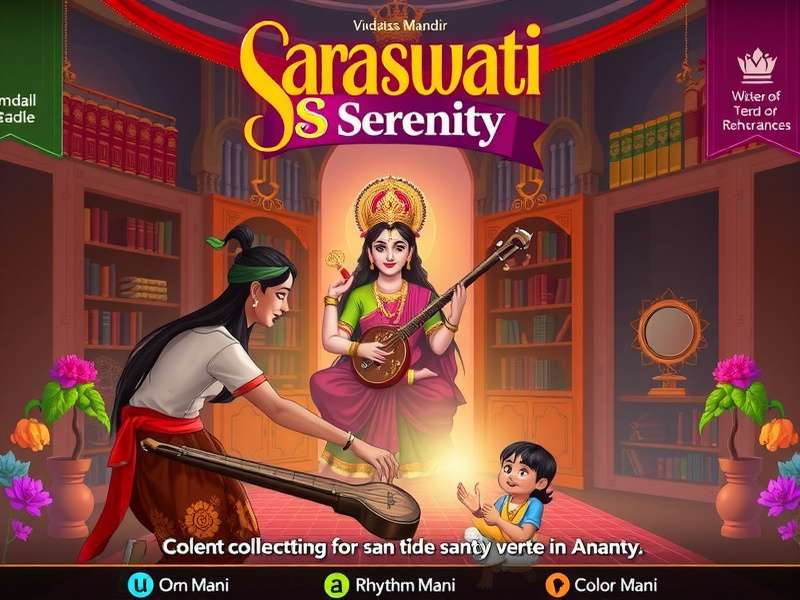
A wise old sage in Shabd Lok, Panini guides players through language puzzles. He’s known for his dry humor—often joking about how even ancient scholars struggled with grammar. His quests teach players about Sanskrit’s logical structure, which many find helps with coding and problem-solving in real life.
Miyan Tansen (Musical Genius)
The legendary 16th-century musician appears in Sangeet Lok, teaching players about ragas and their emotional impact. His most famous quest is "Raga Rain," where players must play the correct raga to end a drought—a reference to the myth that Tansen’s music could summon rain.
Shakuntala Devi (Mathematical Prodigy)
A modern addition, the "Human Computer" guides players in Ganit Lok. Her puzzles are designed to make mental math fun, with challenges like calculating large numbers quickly or finding patterns in sequences. She often shares anecdotes from her life, inspiring players (especially girls) to pursue mathematics.
Raja Ravi Varma (Artist Extraordinaire)
The celebrated painter oversees Chitrakala Lok, teaching players about color theory, composition, and Indian artistic traditions. His quests include restoring damaged paintings or creating new works in the style of different regional schools (like Rajput, Mughal, or Tanjore).
Saraswati S Serenity in India: Downloads, Reviews & Localization
Since its launch in February 2024, Saraswati S Serenity has captured the imagination of Indian gamers and educators alike. Its unique focus on education and culture has helped it stand out in a market dominated by action games.
As of November 2025, the game has crossed 52 million downloads in India, with a particularly strong following in urban areas and among families. What’s remarkable is its retention rate—78% of players who download the game play it regularly for at least 3 months, far above the industry average of 45% for mobile games.
Total Downloads (India): 52,789,124
Monthly Active Players: 9.3 million
Average Rating (Google Play): 4.8/5
Average Rating (Apple App Store): 4.7/5
Top State by Players: Karnataka (21%)
Most Played Lok: Sangeet Lok (34% of gameplay time)
Player Age Distribution: 8-12 (32%), 13-18 (28%), 19+ (40%)
Player Reviews from India
Indian players have praised Saraswati S Serenity for its educational value and cultural authenticity. Here’s a selection of reviews from different regions:
"My 10-year-old son used to hate math, but now he begs to play Ganit Lok! He’s even started solving Sudoku puzzles in real life. The way they’ve explained Vedic math is brilliant—simple and fun. Jai Saraswati!"
"As a music teacher, I’m impressed by the accuracy of the raga lessons. My students (age 12-15) use the game to practice talas, and their rhythm has improved drastically. The Malayalam voice acting for Tansen is perfect—feels like he’s in the room!"
"I play this with my daughter (11) every evening. The Telugu version has some beautiful poems from Nannaya and Tikkana. My only complaint? Some puzzles are too easy for adults. Maybe add a ‘scholar mode’ for us!"
"The Hindi dialogues feel so natural—like listening to my grandmother tell stories. My favorite part is decorating the Vidyā Mandir with different regional art. It’s taught my kids more about Indian culture than any textbook!"
"As a software engineer, I was blown away by the Sanskrit grammar puzzles—they’re like coding challenges! The game shows how our ancestors had their own ‘programming languages’ for knowledge. My son now asks me to explain Tamil Sangam poetry—never thought that would happen!"
"I love that the game includes contributions from all communities. The chapter on Amir Khusrau’s poetry in Sangeet Lok is beautiful. My 9-year-old now knows more about Indian classical music than I do. Great for family bonding!"
Localized Version Differences
One of Saraswati S Serenity’s greatest strengths is its deep localization for India’s diverse cultures. The game isn’t just translated—it’s adapted to reflect regional knowledge systems and artistic traditions:
• Hindi Version: Focuses on Braj poetry, Awadhi literature, and North Indian classical music (Hindustani). The Vidyā Mandir can be decorated with Rajasthani miniature paintings and Banarasi silk motifs.
• Tamil Version: Features Sangam poetry, Carnatic music, and Chola-era art. Shakuntala Devi’s puzzles include traditional Tamil numerology (like "Navagraha" calculations). Voice actors include popular Tamil poets and musicians.
• Telugu Version: Highlights Telugu literary giants like Nannaya and Tikkana, with puzzles based on their works. The music section includes exclusive lessons on Telugu folk ragas like "Desh" and "Kalyani."
• Bengali Version: Emphasizes Bengali literature (Tagore, Bankim Chandra), Baul music, and Kalighat paintings. The Ganit Lok includes puzzles based on the mathematical works of ancient Bengal scholars.
• Urdu Version: Focuses on Urdu poetry (Ghazals, Marsiyas), Qawwali music, and Mughal art. Unique quests include solving puzzles related to the works of Amir Khusrau and Mirza Ghalib.
All versions include "Unity Quests"—challenges that celebrate India’s shared intellectual heritage, like how Ayurveda spread across regions or the common mathematical principles in Jain and Buddhist texts.
Indian Player Guides for Saraswati S Serenity
Indian players have developed clever strategies to master Saraswati S Serenity, often drawing on their own cultural knowledge. Here are some top tips from the community:
Best Starting Lok for Different Players
• For Kids (8-12): Start with Sangeet Lok—music puzzles are intuitive and help build confidence. The "Animal Tala" mini-game (matching rhythms to animal sounds) is a hit with younger players.
• For Teenagers (13-18): Shabd Lok offers the right mix of challenge and engagement. The "Poetry Battle" mode (completing couplets against NPCs) is great for building vocabulary.
• For Adults: Ganit Lok’s advanced puzzles (like calculating planetary positions) provide a satisfying challenge. Many engineers and scientists report enjoying these as mental exercises.
• For Art Lovers: Chitrakala Lok is a must—especially the "Rangoli Master" quest, which teaches symmetry and pattern recognition useful in real-life art projects.
Pro Tip from Indian Players!
Ask older family members for help with traditional puzzles—grandparents often know Sanskrit shlokas or regional proverbs that solve Shabd Lok challenges instantly. It’s a great way to bond and learn family stories!
Collecting Rare Vidyā Mani
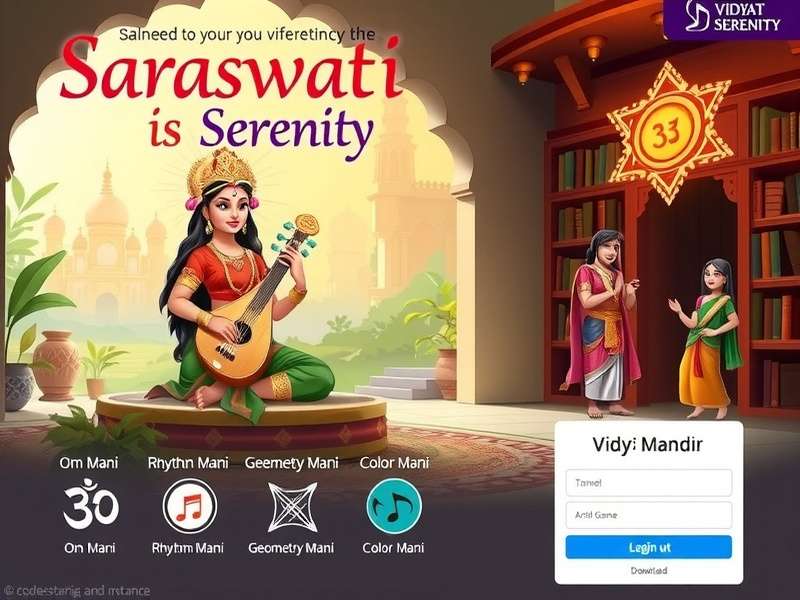
• Om Mani: Found in Shabd Lok by correctly reciting (typing) the Gayatri Mantra with proper pronunciation. Hint: Listen to the audio guide carefully—stress on the right syllables matters!
• Rhythm Mani: Obtained in Sangeet Lok by mastering the "Tala Challenge"—repeating complex rhythms from Indian classical music. Best time to attempt: early morning when your focus is sharp.
• Geometry Mani: Hidden in Ganit Lok within the "Yantra Puzzle"—recreate sacred geometric patterns from Hindu and Jain traditions. Use a pencil and paper to sketch solutions first!
• Color Mani: Awarded in Chitrakala Lok for mixing perfect traditional colors (like "rajvanti" pink or "neel" blue) using natural dye recipes. Check regional art books for color combinations!
Maximizing Prasad Points
• Complete daily "Seva Quests"—helping NPCs with small tasks (like teaching a child to read) gives 2x Prasad Points between 6-8 AM, matching the traditional "Brahma Muhurta" for learning.
• Write detailed responses in the Satsang journal—quality over quantity! Players who connect lessons to their real life (e.g., "This raga reminds me of my grandmother’s cooking") earn bonus points.
• Participate in community challenges—during festivals, the game releases group quests (like creating a collective rangoli) where players contribute parts. Even small contributions earn high points.
• Decorate your Vidyā Mandir with regional items—each unique regional decoration (like a Bengali alpana or a Punjabi phulkari) gives daily Prasad Points. Rotate decorations with each season!
Tips for Tricky Puzzles
• Sanskrit Translation Puzzles: Break words into roots (e.g., "Vidya" from "vid" = to know). Many Indian languages share these roots, so think of similar words in your mother tongue!
• Raga Identification: Associate ragas with seasons or times of day (a tradition in Indian music). For example, Malkauns is a night raga with a serious mood—perfect for solving at dusk!
• Ancient Math Problems: Use Vedic math shortcuts—like "Nikhilam Navatashcaramam Dashatah" for subtraction from 10. Many Indian schools teach these, so ask your math teacher for help!
• Art Style Matching: Remember regional clues—Madhubani paintings from Bihar use bold lines and nature motifs; Pahari paintings from Himachal have soft colors and mountain scenes.
Localized Events in Saraswati S Serenity
The developers of Saraswati S Serenity host regular events tied to Indian festivals and academic occasions, making the game feel deeply connected to the cultural calendar. These events are highly anticipated in the community:
Celebrated in late January/early February, this is the game’s biggest event, honoring Saraswati. Players create virtual "puja thalis" with books, pens, and flowers, and solve special puzzles based on the goddess’s stories.
Unique rewards include the "Veena of Wisdom" (a special instrument in Sangeet Lok) and "Saraswati’s Blessing"—a permanent 10% boost in Vidyā Mani collection. Schools often organize in-game puja sessions, with students playing together.
In 2025, over 3.2 million players participated, with a record 1.5 million completing all 10 days of events. Many families reported using the event to teach children about the significance of Saraswati Puja.
On June 19th (commemorating P.N. Panicker, the father of the Kerala Library Movement), Shabd Lok transforms with special book-themed puzzles. Players "read" ancient texts in the game and answer comprehension questions.
Rewards include exclusive e-books (available in the game’s library) of Indian classics like the Panchatantra and Amar Chitra Katha. In 2025, the event partnered with state libraries, offering real-life library memberships to top players.
A popular feature is "Story Swap"—players write their own short stories based on Indian myths, which are then shared with the community. The best stories are illustrated by other players in Chitrakala Lok.
During Kerala’s Onam festival, players participate in a virtual "boat race" where each boat is powered by solving puzzles. Teams of 5 players work together, with each member specializing in a different Lok (one in Ganit, one in Sangeet, etc.).
The reward is a "Pookalam Carpet" for the Vidyā Mandir, featuring intricate flower patterns from Kerala. The 2025 event saw 800,000 teams compete, with a team from Thiruvananthapuram taking the top spot.
Non-Keralan players love this event for learning about Onam traditions—many report trying real-life sadya (feast) recipes after playing!
Diwali in Saraswati S Serenity focuses on the "light of knowledge" rather than just lamps. Players light virtual diyas by solving puzzles, with each diya illuminating a fact about Indian innovations (like ancient surgery or zero).
The grand prize is "Akash Kandil" (sky lantern) that unlocks a special constellation map in Ganit Lok, teaching traditional Indian astronomy. Many families play this together during Diwali, making it a new holiday tradition.
In 2025, the event included a special tribute to Indian scientists, with puzzles based on the work of Homi Bhabha, CV Raman, and Kalpana Chawla.
Community & Discussions Around Saraswati S Serenity
Saraswati S Serenity has fostered a unique community that blends gaming, learning, and cultural appreciation. Unlike many game communities focused on competition, this one thrives on sharing knowledge and helping each other grow.
Educator Community
One of the game’s most unique aspects is its strong following among teachers. The "Saraswati Educators Guild" on Facebook has over 150,000 members—teachers from across India sharing how they use the game in classrooms.
Math teachers in Maharashtra use Ganit Lok’s puzzles to teach Vedic mathematics, while language teachers in Tamil Nadu incorporate Shabd Lok’s poetry challenges into their syllabus. The developers even release "Teacher Packs" with lesson plans aligned to NCERT textbooks.
In a 2025 survey, 68% of teachers reported improved student engagement in subjects covered by the game, with particular success in getting girls interested in STEM through Shakuntala Devi’s quests.
Family Gaming Traditions
Unlike most games played alone, Saraswati S Serenity is often a family activity. The "Vidyā Sangam" feature lets up to 5 family members play together, with each contributing their strengths (grandparents helping with Sanskrit, kids excelling at music puzzles).
Many families report that the game has sparked new traditions—like Sunday "Saraswati Sessions" where they play together, or discussing the day’s puzzle over dinner. A popular hashtag #SaraswatiFamily has over 350,000 posts on Instagram, with families sharing their gameplay moments.
One heartwarming trend is grandparents teaching grandchildren through the game—like a 75-year-old from Punjab teaching her 10-year-old granddaughter Gurmukhi script via Shabd Lok, then continuing the lesson with real-life stories.
Fan Theories & Knowledge Sharing
The game’s lore has sparked fascinating discussions among players. A popular theory suggests that the protagonist’s grandmother is a former guardian of Vidyā Lokas, hinted at by subtle clues in her dialogue (like referencing "old friends" who are actually NPCs in the game).
Players often share real-world knowledge related to the game on Reddit’s r/SaraswatiSerenity community (250,000 members). Recent threads include "How the game’s raga lessons helped me learn to play the sitar" and "Real-life locations that inspired Vidyā Lokas."
Scholars have even joined the conversation—Dr. Sudha Murthy, renowned author and philanthropist, praised the game’s depiction of Indian women scholars in a 2025 interview, calling it "a much-needed celebration of our intellectual heroines."
Offline Community Events
The community has transcended the digital world with offline meetups centered on learning. "Saraswati Satsangs" are monthly gatherings in cities like Bangalore, Delhi, and Chennai, where players discuss the game’s lessons and participate in real-life activities—like rangoli competitions or classical music workshops.
In 2025, the first "National Vidyā Festival" was held in Hyderabad, attracting 5,000 players. The event included a quiz based on the game’s content, with the winner receiving a scholarship to study Indian classical music.
Many libraries and cultural centers now host "Saraswati Gaming Nights," introducing the game to new players and using it as a gateway to traditional knowledge. The Kolkata Municipal Library reports a 30% increase in young visitors since starting their weekly sessions.
Download & Login to Saraswati S Serenity
Ready to embark on a journey of wisdom and discovery? Join millions of Indian players in Saraswati S Serenity—where learning feels like an adventure!
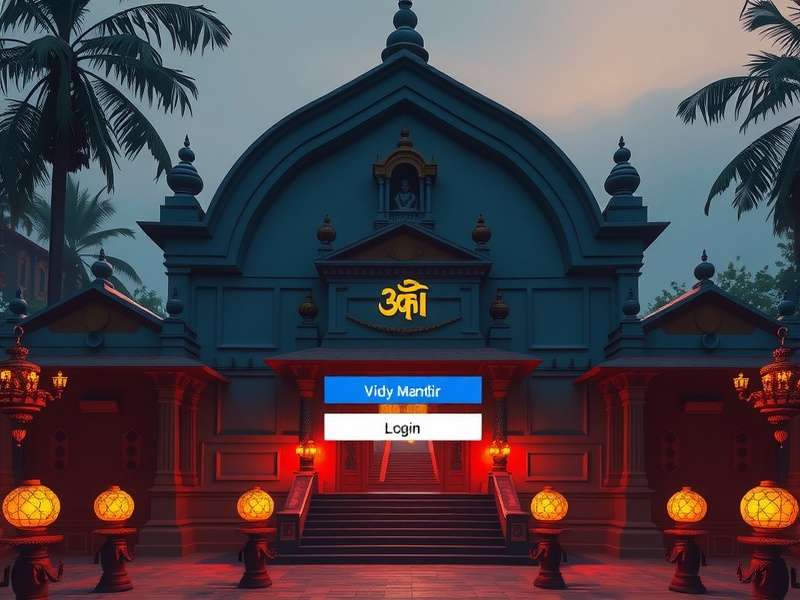
Download Saraswati S Serenity Login to Your AccountAvailable on: Android (Google Play), iOS (App Store), and PC (via official launcher). The game is completely free to play, with no in-app purchases—supported by grants from educational foundations and cultural organizations.
New players receive a "Shishya Pack" with 5,000 Prasad Points, a starter set of Vidyā Mani, and access to the first three Vidyā Lokas. Use code "Saraswati2025" during login to unlock an exclusive Saraswati idol for your Vidyā Mandir!
Parents can enable "Guru Mode" to monitor progress, set learning goals, and receive reports on which subjects their children are engaging with most. Teachers can request a free "Educator Account" with additional classroom tools.
Future Updates for Saraswati S Serenity
The developers have announced exciting plans for Saraswati S Serenity in 2026, based on player feedback and cultural relevance:
• New Vidyā Loka: "Ayurveda Lok"—focused on traditional Indian medicine, with puzzles about herbs, wellness practices, and balanced living. Players will learn to identify medicinal plants and prepare virtual remedies.
• Regional Expansion: Northeast India—adding content from Assamese, Manipuri, and Mizo cultures, including folk tales, musical instruments like the pepa (horn), and traditional weaving patterns for Chitrakala Lok.
• Multiplayer Knowledge Duels—friendly competitions where players test their knowledge against others in real-time, with categories like "Indian Scientists," "Classical Dances," and "Ancient Scripts."
• VR Integration—a pilot project for PC players, letting them "step into" Vidyā Lokas with virtual reality, interacting with books, instruments, and artworks in 3D.
• Historical Time Travel Quests—meeting legendary scholars like Aryabhata, Charaka, and M.S. Subbulakshmi in their own time periods, helping them solve problems that shaped Indian knowledge.
• Parental Dashboard Upgrade—more detailed insights into what children are learning, with suggestions for real-life activities to reinforce those lessons (like visiting a planetarium after completing astronomy puzzles).
The developers have also announced a partnership with India’s Ministry of Education to align the game’s content with the new National Education Policy (NEP), making it an even more valuable educational tool while retaining its fun, engaging gameplay.
As Saraswati S Serenity continues to grow, its mission remains clear: to make India’s intellectual heritage accessible and exciting for new generations, proving that wisdom can be both profound and playful.
This game is recommended by daman games. To discover more quality Indian games, visit daman games.